|
Dal Gianicolo a Castel Sant'Angelo
From Gianicolo, starting point of our itinerary, after having admired the splendid panoramic view over the centre of Rome, you continue on the “Via Passeggiata del Gianicolo”.
At the end of the street turn left on Borgo S. Spirito, you arrive then to the City of the Vatican.
Here you can spend a nice afternoon visiting the Basilica of Saint Peter and the Cupola with the panoramic view over the city.
Our itinerary continues with the visit of the Vatican Museums which host the famous Sixtin Chapel of Michelangelo with the precious Universal Judgement, the Rooms painted by Raffaello Sanzio and a very rich collection of art works.
Going back to our itinerary and continuing on Via della Conciliazione, we arrive to Castel Sant’Angelo connected to the city of Rome by the Bridge Sant’Angelo where you can visit all the areas of the Castle.
|
|
|
The 4 basilicas
Since the year 1300, on the will of Pope Bonifacio VIII, started the celebration of the "Jubilee" in Rome, also called "Saint Year".
During this period it is possible to benefit from the plenary forgivingness by visiting at least one of the 4 big Roman basilicas.
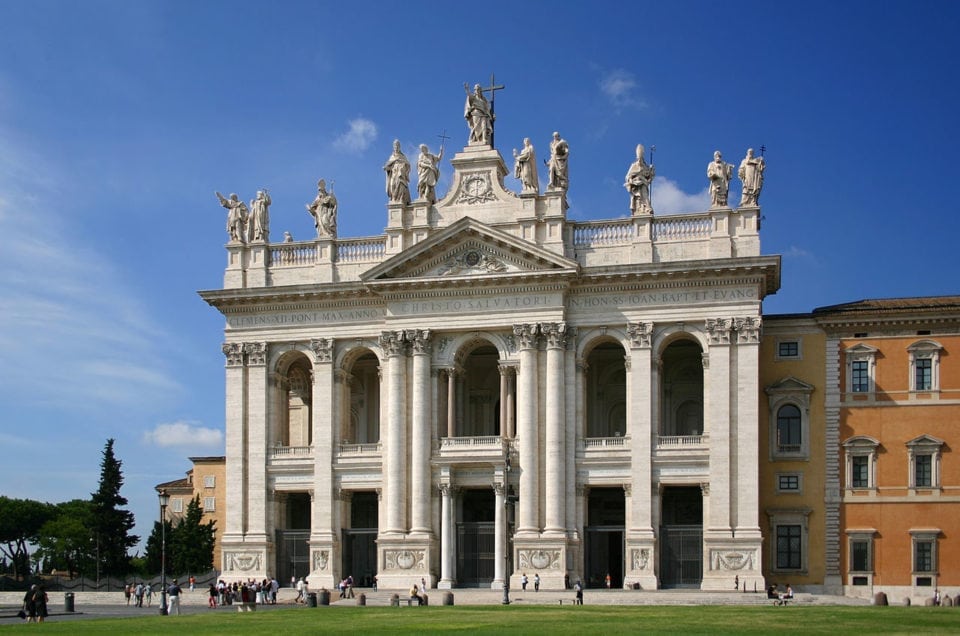
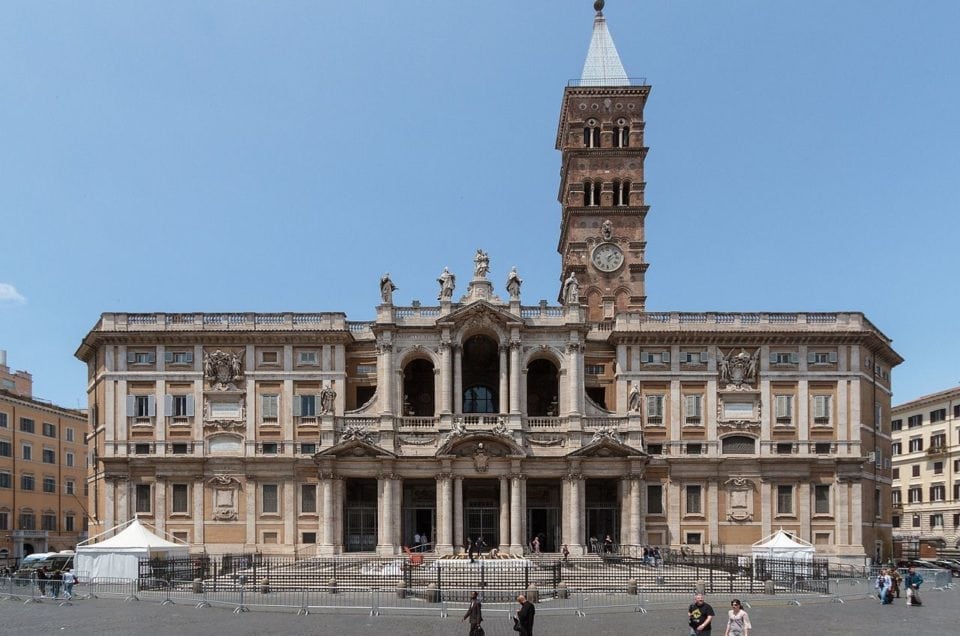
Initially the Jubilee was taking place once every 100 years. Nowadays it takes place every 25 years. In the same way, initially, to benefit from the plenary indulgence, it was necessary to visit all the four big basilicas, and that is: St. John in Lateran, the mother of all the churches of the world, St. Mary Major, built in 352 after the apparition of the Madonna, the Basilica of San Pietro, the biggest church of Christianity, and San Paolo out of the walls, consecrated in 324 and unfortunately destroyed by the fire in 1823, to be then rebuilt on the same basement and consecrated in 1854 by Pope Pio IX.
|
|
|
Dalla Fontana di Trevi all’Arco di Costantino
Leaving from the Fountain of Trevi, an obligatory stop for who is visiting Rome, one continues on Via del Corso up to arrive to the famous Piazza Venezia located at the basis of the Campidoglio, nowadays headquarter of the City Hall of Rome.
Leaving the Campidoglio, where you can admire on the front square the Statue of Marco Aurelio, we continue our walk on Via dei Fori Imperiali up to arrive to the Foro Romano, symbol of the antiquity of the Roman civilisation.
Continuing our itinerary around the antique Rome, not far away from the Foro Romano, you have to visit the Coliseum, symbol by excellence of the Roman power and one among the most famous monuments in the world, such as the Arch of Constantine.
|
|