The Colosseum and Imperial Forums of Rome are maybe the best testimony of the grandness and the magnificence of the imperial Rome.
The Colosseum of Rome was built in bricks and clad of travertine in a valley among the Palatino, Esquilino and Celio hills after the drainage of a small lake used by Nero for his Domus Aurea.
Amongst the first quarters of Rome, the Flaminio ( so called because of the homonym road ) was born in 1911 together with other 14 districts; it is placed near the Mura Aureliane and to the Tiber River, and borders on the Quartiere Della Vittoria, on Parioli, on the Pinciano and on Campo Marzio.
The Trevi Fountain of Rome, realized under the Pontificate of Clemente XII around 1735 after Christ along the "Palazzo Poli", is the work of the architect Nicolò Salvi and it is still nowadays alimented by the water supply system Virgin projected in 19 before Christ by the consul Agrippa.
The temple of the Pantheon in Rome was built on the area of the "Campo Marzio", where, according to an antique tradition, the founder of city, Romulus, would have reached the sky.
La fontaine de la Barcaccia, cœur de l'irrégulière place Piazza di Spagna termine l'espace visuel de la rue du Babuino. Le magnifique grand escalier de la Trinité des Monts converge vers la fontaine, création de Pietro Bernin, père du plus célèbre Gian Lorenzo.
The Cestia Pyramid in Rome is a funerary monument dedicated to the member of the "College of the Septemviri" Caio Cestio Epulone, who probably died in 12 B.C. The work, which well demonstrates what kind of fascination the Egypt exercised on the aristocratic classes of Rome after the conquest of 30 B.C., is built in concrete and externally covered by marble slabs.
The area of Piazza Navona in Rome copies the dimensions and the form of the antique Stadium of Domiziano dating from the Roman times; an arena more than 270 metres long and roughly 55 meters large, built around 86 after Christ and able to welcome up to 33000 persons.
The Prati (Lawns) district, that owns its name thank to the grass-clad expanse, to vineyard and to bed of reefs that covered the area in the Ancient Rome age, going from the Castel Sant'Angelo to Ponte di Margherita, is the youngest area of the City, and is studded with many shops and famous ways ( such as Via Cola di Rienzo ); there are many others tourist accommodation and hotels in Rome, Prati location.
A few meters from Termini Station you can find Piazza della Repubblica, one of the historic squares of Rome. Until the Fifties that square was known as Piazza Esedra (many still call it so today), so called because of the fact that covers exedra-theater of the ancient Baths of Diocletian, which still face the square.
San Lorenzo, district that gained its name form the San Lorenzo Door ( the current Porta Tiburtina, form where you can reach the Esquilino District ) or, more probably, from the Basilica di San Lorenzo Fuori le Mura, is defined by the Mura Aureliane (Aurelio's Wall), by the Tiburtina Way and by the Verano, the famous and monumental cemetary of the city. In this quarter of Rome, many hotels offer very good possibilities for your stays.
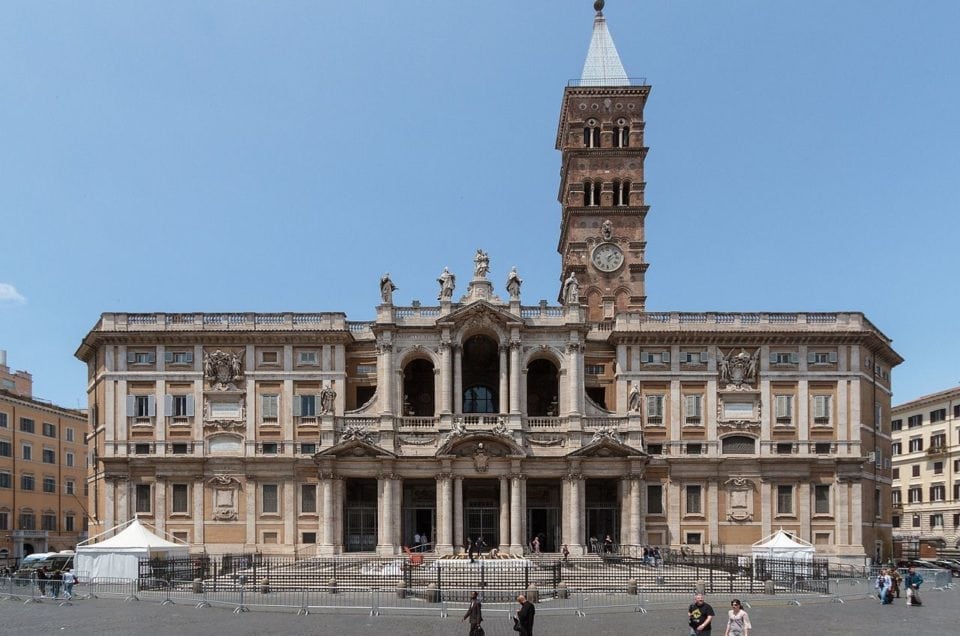
C'est la plus grande église dédiée à la Vierge. Selon une antique légende elle fut construite sur l'emplacement où il neigeât miraculeusement dans la nuit entre le 4 et le 5 août 356. D'après les documents elle date du siècle suivant : Sixte III fit ériger le grand temple dédié à la Vierge reconnue mère de Dieu par le Concile d'Ephèse.
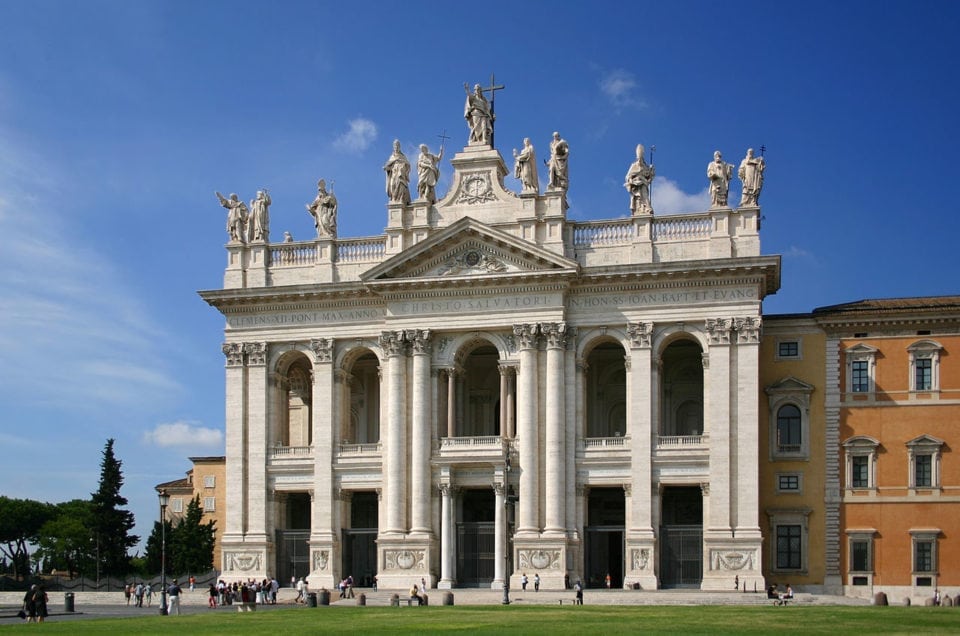
Saint Jean de Latran se présente avec sa façade monumentale réalisée au XVIII° siècle par Alessandro Galilei, comme accomplissement d'une longue série de reconstructions. La grande place en face de la basilique est le théatre d'évènements sacrés et profanes : siège d'importantes cérémonies religieuses.
Le gouvernement italien hérita du Pape Pie IX le projet d'après lequel avait été commencée la construction de la Gare centrale de Rome. Projetée pour les nouveaux voyageurs du XIX° siècle elle fut aménagée dans une zone centrale, mais en même temps dépourvue de grands édifices et riche de l'eau nécessaire au fonctionnement des installations à vapeur.
Les Thermes de Caracalla sont, parmi les nombreux grands établissements thermaux de l'époque impériale, ceux qui nous sont parvenus dans les meilleures conditions. Conservé intégralement dans son dessin d'origine, bien que dépouillé de ses marbres et de ses décorations, l'établissement offre un exemple important des caractéristiques de l'architecture romaine: plan axial, symétrie et fonctionnalisme.
Rome Trastevere is considered by numerous people the most authentic Roman quarter because, even though it is located not far away from the main tourist areas of the city, it has preserved the own characteristic rhythm and lifestyle.
The City of the Vatican in Rome is an autonomous State governed directly by the Pontificate and officially recognized through the "Patti Lateranensi" of 1929 by the Italian Republic.
The entire area of Via Veneto in Rome, which became famou because sign offashion and glamour in Rome nights at the time of period of the "dolce vita" /from the title of Fellini's masterpiece), was designed around 1889 and called Vittorio Veneto.
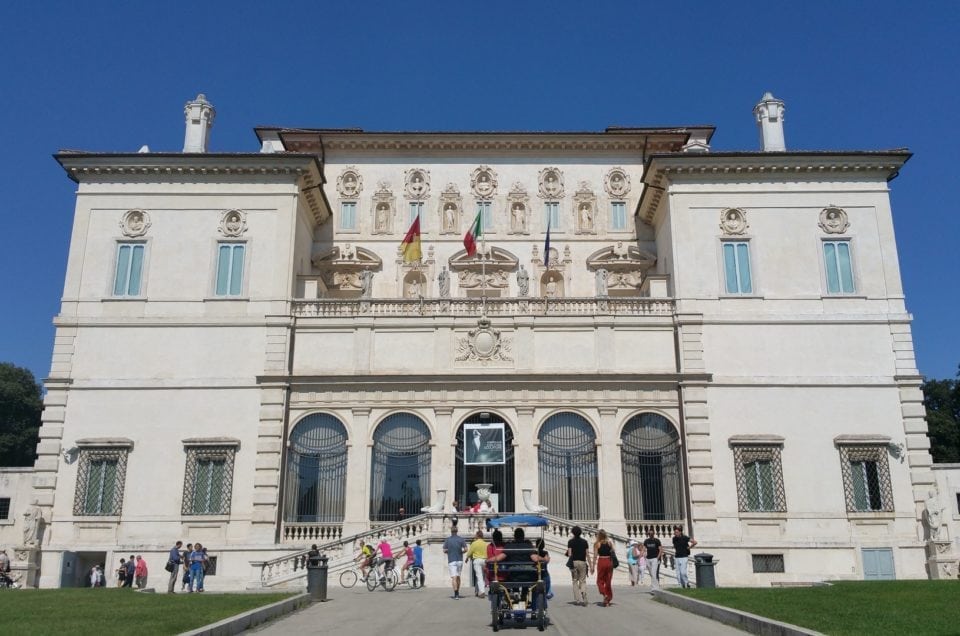
Les deux propylées dessinés par Luigi Canina durant la troisième décennie du XIX° siècle, marquent l'entrée de Villa Borghèse, la plus populaire des innombrables villas existantes à Rome jusqu'à la fin du XIX° siècle. La Villa fut réalisée au début du XVII° siècle pour le Cardinal Scipion Borghèse, auteur de la politique culturelle du pontificat de son oncle: